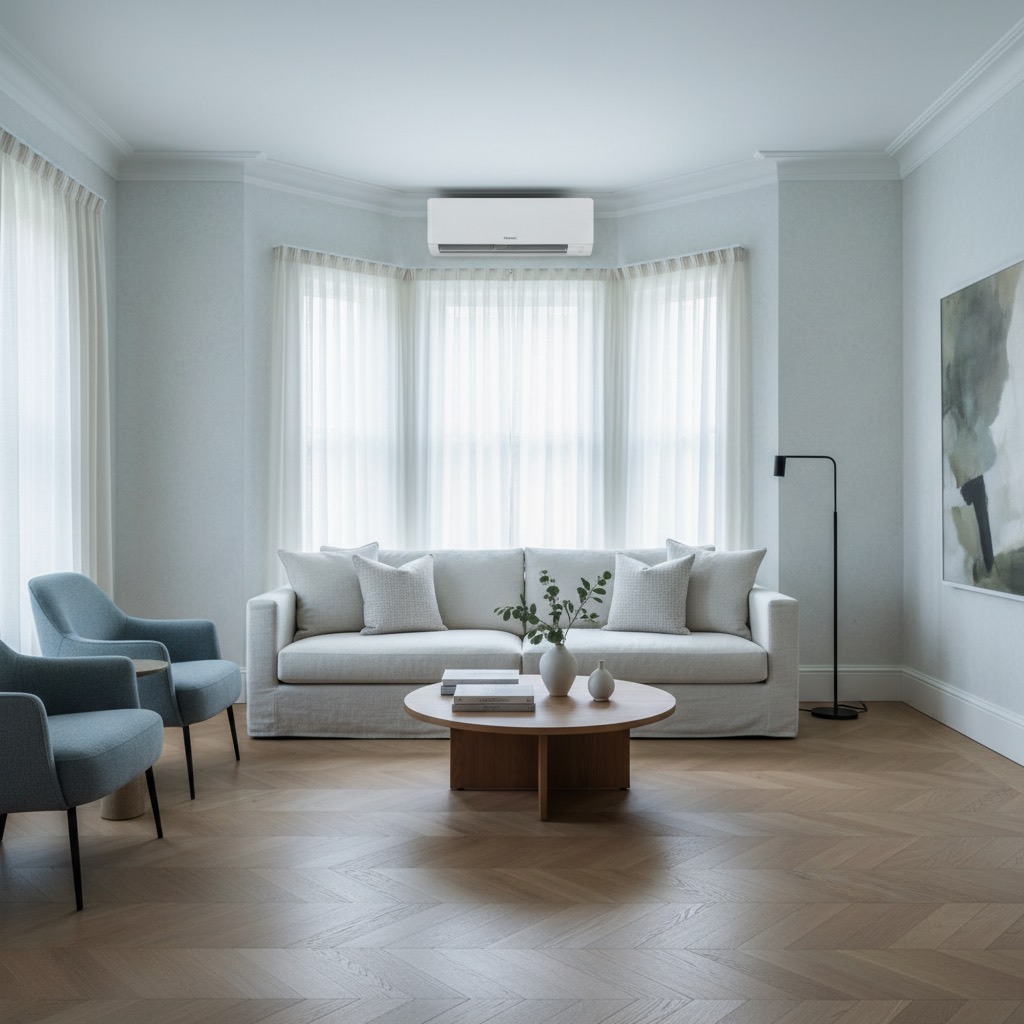
Why Southwark homes get so hot
Southwark packs several very different kinds of housing into a few miles, and they overheat for different reasons. The Victorian terraces around Peckham, Nunhead and East Dulwich have solid brick walls that soak up heat over a warm week and release it slowly — which is why the upstairs bedrooms can still be stifling at midnight when it has cooled off outside. Georgian and early Victorian houses in and around Dulwich Village have taller ceilings that help a little, but large single-glazed sash windows facing the sun do not.
Then there is the riverside stock in Bermondsey and along the Thames — warehouse conversions around Shad Thames and heavily glazed apartments built in the last twenty years. These are effectively greenhouses in July: sealed, well insulated to keep heat in, and often with windows that only open a crack. Being in inner London means nights bring less relief than they do further out.
A modern split-system unit handles this properly, and it works both ways: it is a reversible air-to-air heat pump, so the same unit heats in winter far more cheaply than plug-in electric heaters. For a period terrace, our guide to air conditioning in Victorian homes covers the specifics, and our UK cost guide sets out what installation realistically costs — we would rather point you at honest figures than quote a number here that would not survive a survey.
Planning, leaseholds and older wiring
Three things to check before anyone quotes you:
- Conservation areas. Southwark has plenty, and parts of Dulwich also sit under the Dulwich Estate, which has its own approval process for external alterations. Check with the council — and the Estate, if that applies to you — before fixing anything to an outside wall. Listed buildings need consent too.
- Flats and leasehold. Much of the Bermondsey riverside stock is leasehold, and you will almost always need freeholder or managing-agent consent for an external unit. Start that conversation early.
- Electrics. Older terraces sometimes need a consumer unit upgrade before a unit can go in. An electrical condition report (EICR) tells you where you stand, and any decent installer will check before quoting.
Where Coolhouse is up to in Southwark
Honestly: we are not here yet. Our vetted installers are currently in Hertfordshire, and we are building the network out from there. We will not pretend otherwise or promise a survey we cannot deliver. What we can do is take your details, tell you straight where we are up to, and match you when installers covering south-east London come on board. If that is useful, get a rough estimate for your home and register your interest — when we have someone we would trust in our own house, you will be the first to know.